Carbon footprint calculation software is a program that helps companies and organizations calculate their carbon emissions. It uses algorithms to measure an organization's emissions from their daily activities, such as transportation, purchasing habits, heating and cooling, and electricity use. With the software, organizations and individuals can gain insight into their carbon emission profile and take steps to reduce their environmental impact.
The CO2 Footprint Calculator for Companies
The audited software for Corporate Carbon Footprints according to DIN EN ISO 14064-1 and the Greenhouse Gas Protocol. For Scope 1, 2 and 3, clear documentation, and results that can be used across the company.
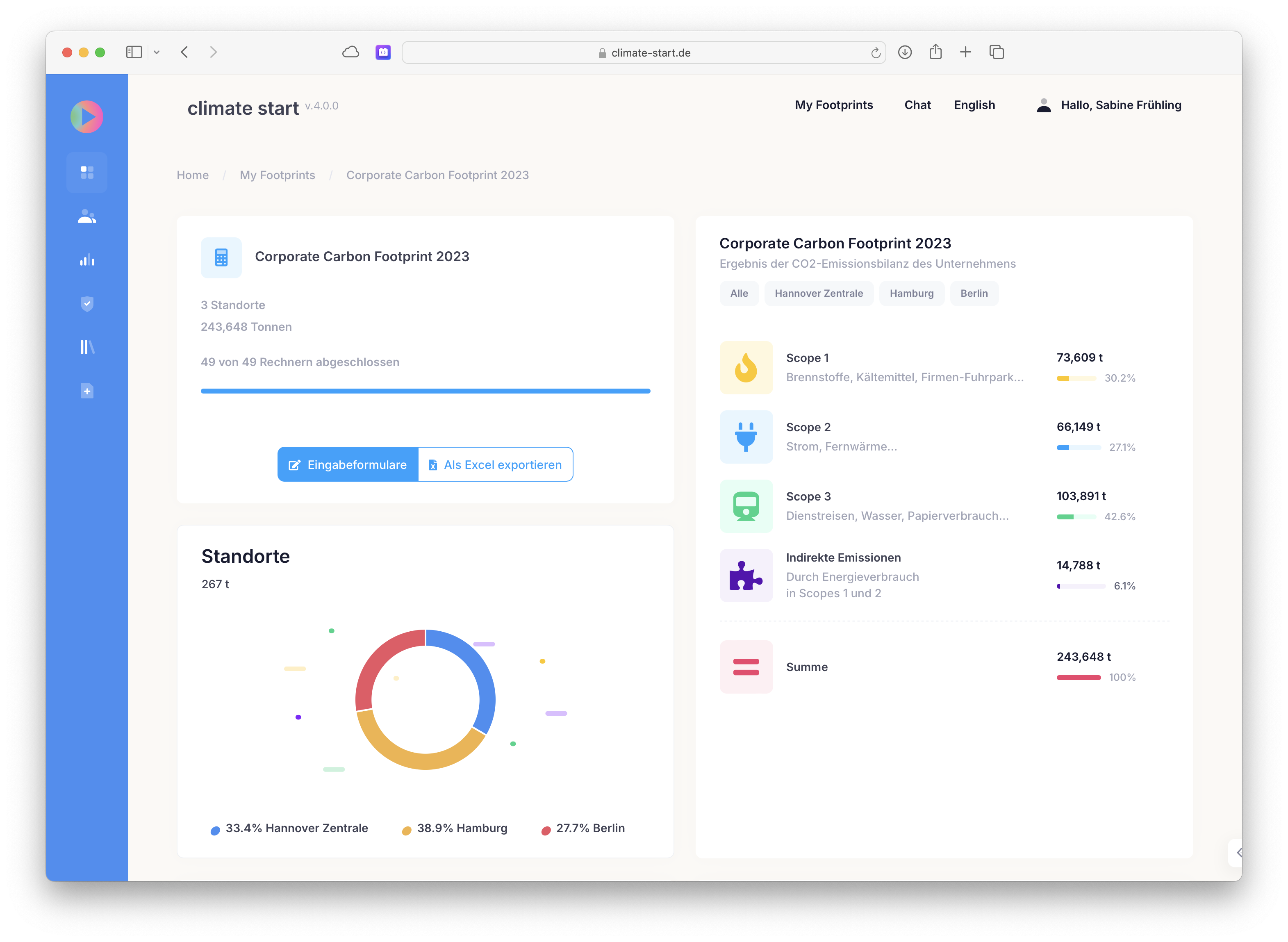





C L I M A T E S T A R T V. 4. 0.
Methodologically sound, scalable, easy to use.
Climate Start is software that provides a complete lifecycle carbon footprint analysis of your business operations. The software allows you to calculate your Scope 1,2,3 emissions, including energy consumption and logistics, as well as Scope 3 administrative emissions, such as purchased goods and services, water and waste from your office buildings and business travel.
Standards-based methodology
- DIN EN ISO 14064-1
- Greenhouse Gas Protocol (GHG)
- For the Scopes 1, 2 & 3
- Corporate Value Chain (Scope 3)
- Breakdown Kyoto greenhouse gases
- Quantification approaches
Small to large enterprises
- Multilingual
- Adaptation to company size
- Unlimited number of sites
- Multiple users
- Administration overview
Easy to use
- Real-time calculation
- User-friendly
- Intelligent workflows
- Each user sees their own interface
- Collaboration features
- Self-explanatory
Detailed reports
- Data visualization and dashboards
- KPI's for Management
- Benchmarking & Goal Setting
- Branch Analysis
- Comparison Functions
- Excel Export
- CSR Report Integration

Designed in conformity with ISO 14064-1 & GHG Protocol
DIN EN ISO 14064-1 & Greenhouse Gas Protocol „A Corporate Accounting and Reporting Standard“

Climate Start reflects the methodological requirements for accounting and determining greenhouse gas-related information for a complete Corporate Carbon Footprint across Scope 1, 2 and 3. This provides a reliable basis for internal analyses, external requirements, and documented results.
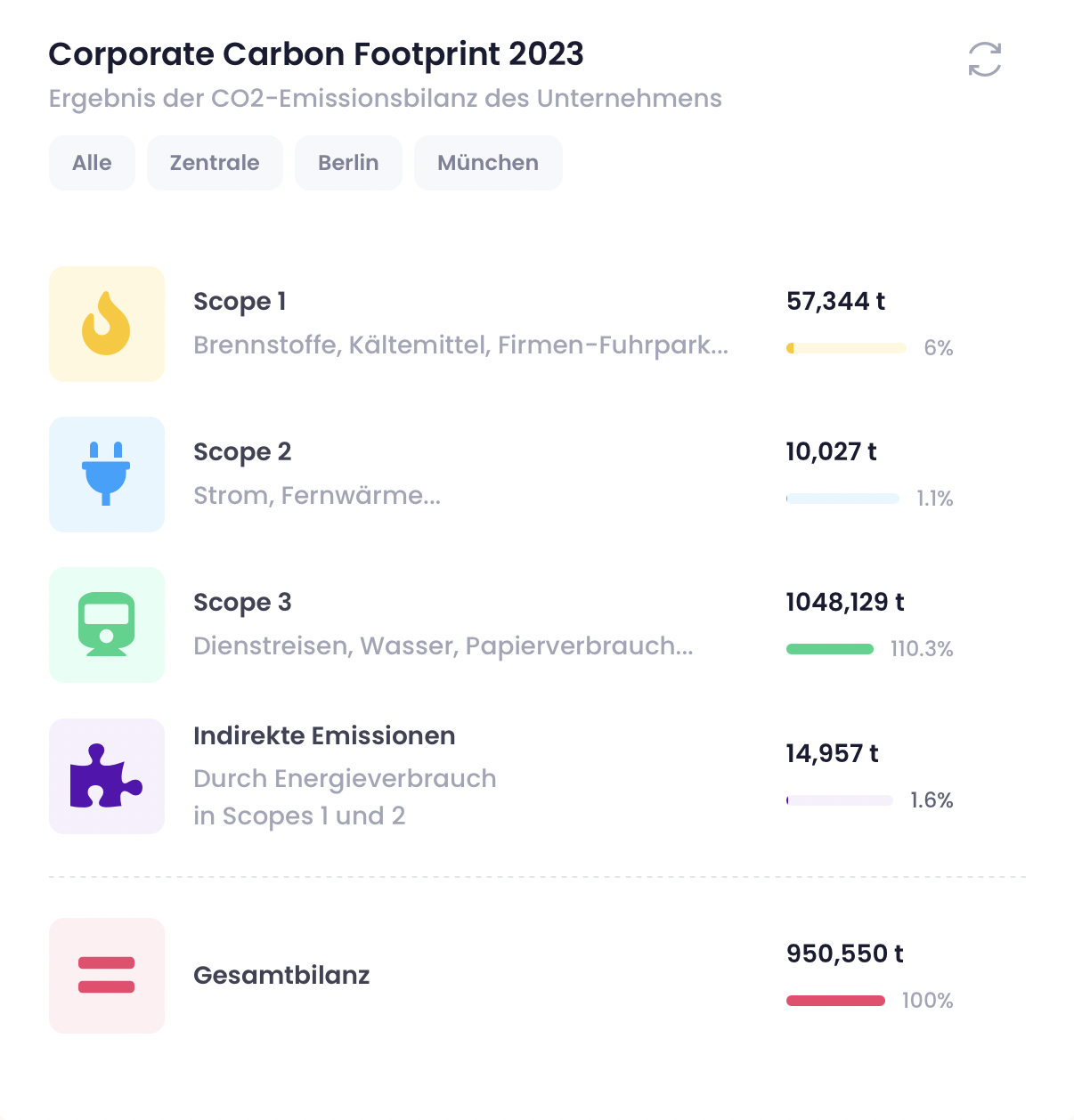
Scopes 1, 2 und 3
Complete 15 GHG protocol areas and emissions across the value chain upstream and downstream activities.
Calculate your company's carbon footprint across Scope 1, 2 and 3 emissions to bring carbon transparency to your entire operation, including your supply chain and materials. materials.

Service as a Result (SAAR)
A partnership in carbon reporting
At Climate Extender, we go beyond traditional software solutions. Service as a Result (SAAR) means that we not only provide tools, but also support you in the structured collection of greenhouse gas emissions, the preparation of transparent reports, and the application of the agreed accounting methodology. We are more than a software provider – we combine software, methodology, and personal consulting.

The Award Winner
Green Innovator of the Year 2024
Climate Extender supports companies in establishing transparent greenhouse gas management. Its audited software covers data collection and accounting, the analysis of emissions hotspots, and the development of reduction measures. Climate Extender makes reliable emissions data part of the value chain.
The Award
"With the help of its tool, Climate Extender supports customers on their path to climate neutrality and enables companies not only to record their CO2 emissions, but also to visibly reduce them."

A Software To Be Proud Of
70.000+
EMISSION FAKTOREN
20 Millionen+
TONNEN CO2e, DIE WIR PRO JAHR BERECHNEN
Umwelt Bundesamt
Das Umweltbundesamt (UBA) ist Deutschlands wichtigste Umweltschutzbehörde. Ihre Aufgabe ist es, sicherzustellen, dass unsere Mitbürger eine gesunde Umwelt mit sauberer Luft und sauberem Wasser haben, die so weit wie möglich frei von Schadstoffen ist.
ecoinvent
ecoinvent ist ein gemeinnütziger Verein mit Sitz in Zürich, Schweiz, der sich der Bereitstellung hochwertiger Daten für Nachhaltigkeitsbewertungen weltweit widmet.
EXIOBASE
EXIOBASE ist eine globale, detaillierte multi-regionale umwelterweiterte Verwendungsstruktur (MR-SUT) und Input-Output-Tabelle (MR-IOT). Sie wurde entwickelt, indem Angebots- und Verwendungsstrukturtabellen für eine große Anzahl von Ländern harmonisiert und detailliert wurden, um Emissionen und Ressourcengewinne nach Branchen zu schätzen.
GHG Protocol
Das GHG-Protokoll (Greenhouse Gas Protocol) etabliert umfassende, globale, standardisierte Rahmenwerke zur Messung und Verwaltung von Treibhausgasemissionen (GHG) aus privaten und öffentlichen Sektoroperationen, Wertschöpfungsketten und Minderungsmaßnahmen.
Request demo account now
Sign up for a free product demo account and learn how to take your climate management to the next level with Climate Start.
Jetzt kostenlos testen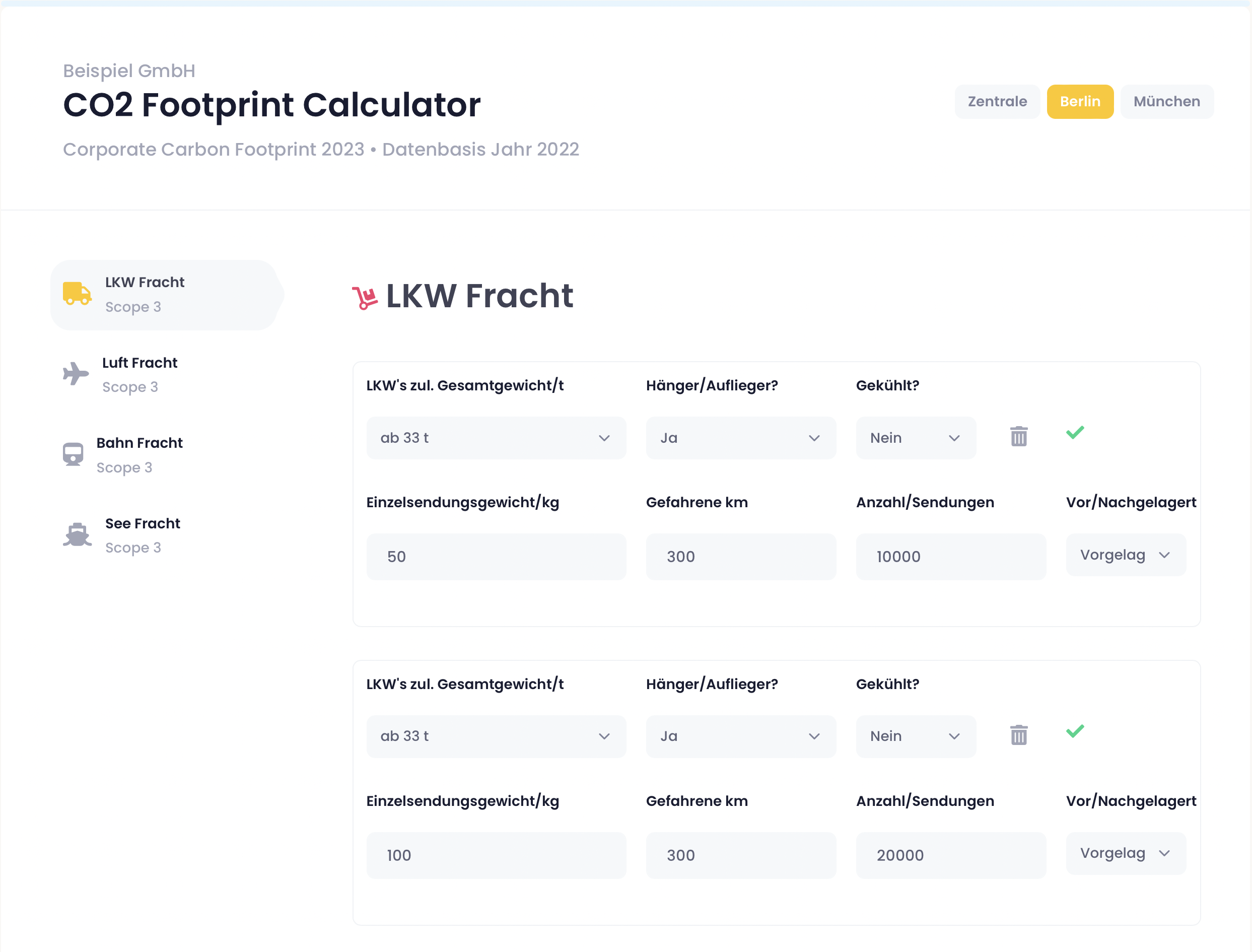
Analyze Your Logistics CO2 Footprint
Land, sea, rail and air
Measure your logistics carbon footprint for all relevant logistics, including sea, air, land, rail and visualize your data in an interactive dashboard. All carbon calculations are fully DIN ISO compliant.
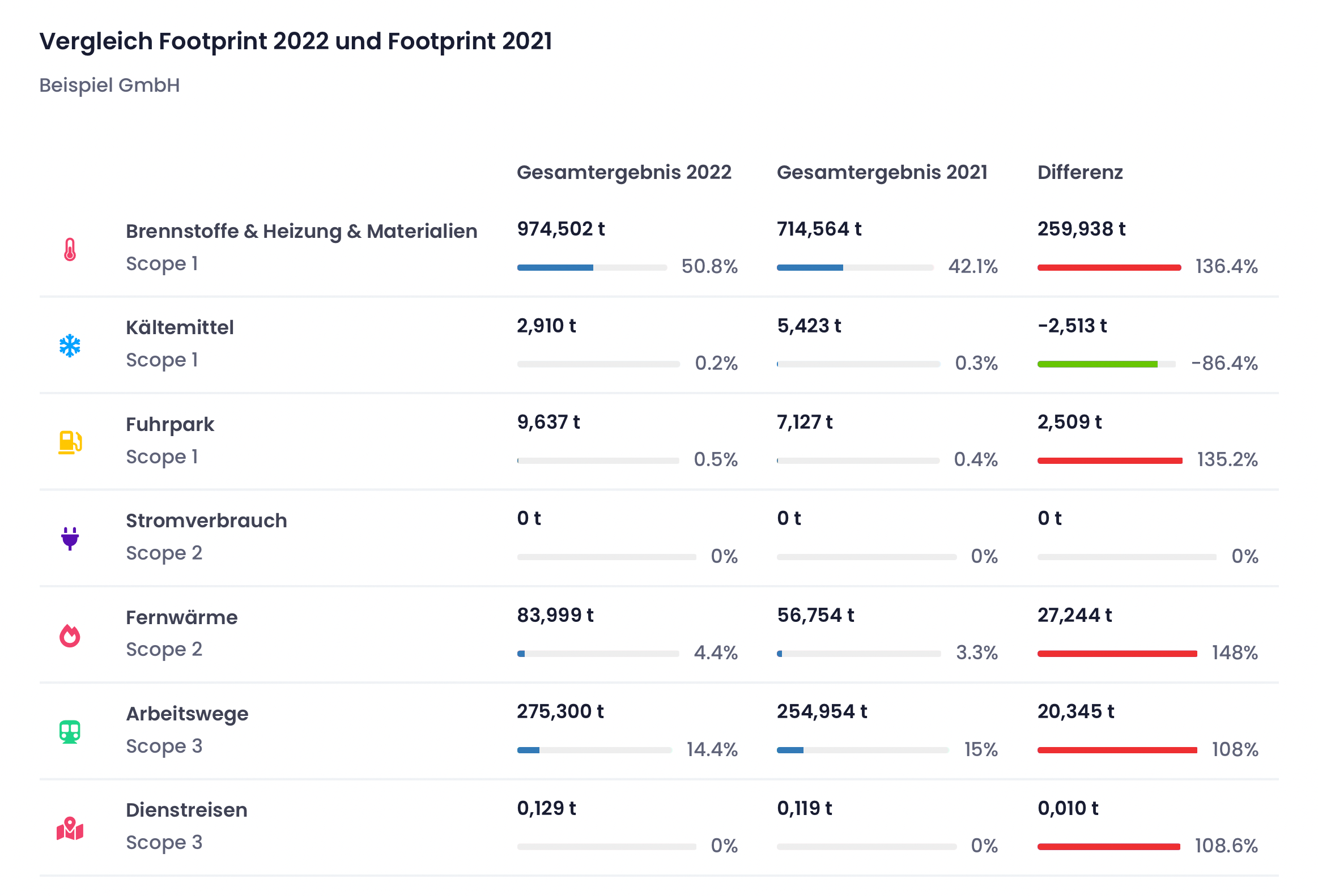
Compare Your Footprints.
What has changed? Keep the overview!
Compare your carbon footprint with those of previous years to document your development.
Request Demo Account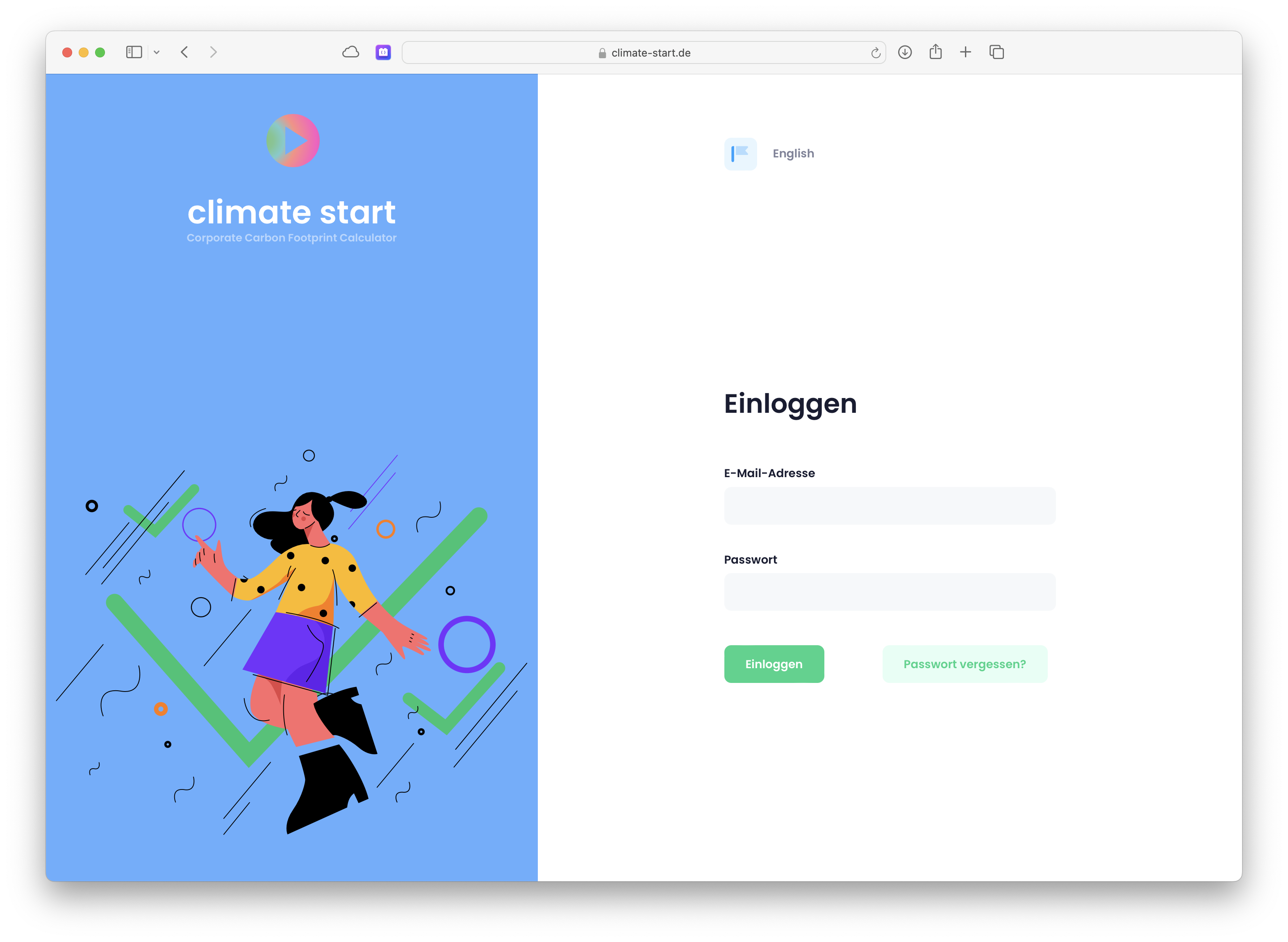
We listened to you and adapted the software to your needs.
Waste Stream Analysis
Environmental impact statements
Renewable energy targets
Supply chain optimization
Sustainable production and consumption
Sustainable supply chain strategies
Sustainable logistics and transportation
Corporate sustainability policies
Free, non-binding initial consultation
Dipl.-Ing. Frank Huschka
Founder of Climate Extender
If you have any questions or any special requirements, please feel free to contact me.
You can call me.
+49 5108 8794185
or write me an e-mail.

Why Climate Extender?
Connect greenhouse gas accounting with clear documentation and practical next steps.
A greenhouse gas inventory as the foundation
Measure and assess emission sources and the reporting boundary based on ISO 14064-1 and the Greenhouse Gas Protocol.

Personal advice
Frank Huschka supports you from the initial assessment through to transparent documentation of your results.

Identify emissions hotspots
The analysis provides a reliable basis for planning avoidance and reduction measures.

Document a Climate Contribution
A Climate Contribution can be documented separately from the operational greenhouse gas inventory with a project reference, reporting period, and allocated emissions volume.

Traceable supporting evidence
The reporting boundary, project details, and available registry or retirement records are presented clearly.

Certified climate protection projects
You support projects with publicly accessible project information and reported climate and SDG contributions.
REQUEST DEMO ACCOUNT NOW
Do you want to test our calculators without obligation?
Would you like to learn more about Climate Start?
We will be happy to inform you, sign up with us!
DEMO ACCOUNT
Frequently Asked Questions
-
What is carbon footprint calculation software?
-
Why do organisations and companies need to calculate their carbon footprint?
Organizations and companies need to calculate their carbon footprint in order to better understand the environmental impacts of their activities, so that they can take action to reduce their environmental impact. It also allows them to demonstrate their commitment to sustainability initiatives and set realistic carbon reduction goals.
-
Why a carbon footprint calculation software need a certification?
A carbon footprint calculation software needs a certification to ensure that it has been tested and verified to be accurate, reliable, and up-to-date with the latest information related to carbon emissions. Certification also serves as a way to demonstrate the software's commitment to sustainability and environmental responsibility.
-
What is net zero target?
A net zero target is a goal set by an organization or government to achieve a balance between the amount of greenhouse gas (GHG) emissions it produces and the amount it removes from the atmosphere. This is often referred to as "net zero emissions" or "carbon neutrality." Achieving a net zero target typically involves reducing emissions through energy efficiency, renewable energy, and other measures, and offsetting any remaining emissions by investing in carbon removal projects or other offsetting mechanisms. Net zero targets have become increasingly popular in recent years as a way to address the urgent need to reduce global GHG emissions and limit the impacts of climate change. Many countries, cities, and companies have set net zero targets, with some aiming to achieve them as early as 2030 or 2040.
-
What is GHG Protocol?
The GHG Protocol is a widely-used standard for measuring and managing greenhouse gas (GHG) emissions. It provides a framework and guidelines for organizations to measure and report their emissions, and helps them develop strategies to reduce their carbon footprint. The GHG Protocol was developed by the World Resources Institute (WRI) and the World Business Council for Sustainable Development (WBCSD) and is used by businesses, governments, and other organizations around the world. The protocol covers three scopes of emissions: Scope 1 (direct emissions from owned or controlled sources), Scope 2 (indirect emissions from purchased electricity, heat, and steam), and Scope 3 (indirect emissions from the value chain, including suppliers, customers, and transportation).
-
What is Kyoto Protocol?
The Kyoto Protocol is an international treaty signed in 1997 to address global climate change. It was adopted in Kyoto, Japan, and entered into force in 2005. The main goal of the protocol is to reduce greenhouse gas emissions from industrialized countries, which are primarily responsible for global warming. The protocol sets binding targets for these countries to reduce their emissions by a certain percentage below their 1990 levels. The protocol also establishes a system of emissions trading that allows countries to buy and sell emissions credits in order to meet their targets. The Kyoto Protocol is considered a landmark agreement in the global effort to address climate change, although it has been criticized for its limited scope and effectiveness in reducing emissions.
-
What are the key elements of footprint calculation software?
The key elements of footprint calculation software include: 1. Data Collection & Management 2. Footprint Assessment & Reporting 3. Excel Modeling 4. Cost Analysis 5. Carbon Accounting 6. Supply Chain Optimization 7. Environmental Externality Measurement 8. Regulatory Compliance 9. Benchmarking & Target Setting 10. Risk Analysis 11. Data Visualization & Dashboards 12. Cloud Hosted Applications 13. Multi-channel Interoperability 14. Carbon Offset Tracking & Management 15. Disclosures & Transparency 16. International Accounting Protocols 17. Creative Metrics & Tools 18. Corporate Sustainability Policies 19. Waste Stream Analysis 20. Project Control & Management 21. Product Lifecycle Analysis 22. Environmental Impact Statements 23. Resource Management 24. Industrial Ecology Modeling 25. Renewable Energy Strategies 26. Sustainable Production & Consumption 27. Sustainable Supply Chain Strategies 28. Sustainable Logistics & Transportation 29. Renewable Energy Certifications 30. Greenhouse Gas Quantification & Reporting